
Artificial Intelligence Department
Department of Artificial Intelligence
/Dr-K-Thyagarajan.png)
Dr. K Thyagarajan
HOD, Dept of CSE(AI), AI
M.Tech., Ph.D
Department Profile
The Department of Artificial Intelligence at Sri Venkateswara College of Engineering and Technology (SVCET), Chittoor, was established in 2025 with an initial intake of 60 students. With academic autonomy, the department has designed its own innovative curriculum that blends fundamental computer science courses with advanced Artificial Intelligence concepts. The four-year B.Tech program aims to provide students with strong foundations in AI, machine learning, data science, and robotics, while preparing them to apply these skills to solve real-world problems across industries such as healthcare, automation, and data analytics.
The program follows a student-centric approach, combining classroom instruction, project-based learning, and industry internships. Courses such as Advanced Machine Learning, AI for Natural Language Processing, Recommender Systems, Predictive Analytics, AI for Computer Vision, and Cloud Computing for AI ensure that students gain both theoretical knowledge and practical expertise. Students are encouraged to participate in hackathons, technical clubs, and research projects in areas like deep learning, natural language processing, machine vision, and AI ethics, fostering innovation and hands-on experience.
The department is headed by Dr. M. Lavanya, who brings over 20 years of teaching and research experience with expertise in Data Mining, Web Mining, Machine Learning, and Data Analytics. She has published 25 research articles, organized technical events, guided projects, and holds patents in Artificial Neural Networks. With highly qualified faculty, research-driven initiatives, and collaborations with leading tech companies, the department ensures that students receive holistic training, global exposure, and industry readiness to excel in their careers or pursue higher education.
Our Objectives
- To impart strong foundational knowledge in Artificial Intelligence, Machine Learning, Data Science, and related technologies.
- To promote project-based learning, research, and innovation in emerging areas of AI.
- To equip students with industry-relevant skills through internships, workshops, and industry collaborations.
- To encourage participation in hackathons, technical clubs, and co-curricular activities for holistic development.
- To nurture ethical values and responsible use of AI technologies for societal benefit.
- To prepare graduates for successful careers in AI, data analytics, automation, and higher studies.
- To provide hands-on experience with modern AI tools, frameworks, and cloud platforms.
- To foster innovation and entrepreneurship in Artificial Intelligence applications.
- To encourage interdisciplinary research in healthcare, robotics, finance, and other domains.
- To build problem-solving and critical thinking skills through real-world case studies.
- To strengthen collaboration with national and international institutions for research and knowledge exchange.
Department Strength
- ✔ Academic Autonomy
- ✔ Comprehensive Curriculum
- ✔ Experienced Leadership and Faculty
- ✔ Hands-On Learning Opportunities
- ✔ Rapid Growth and High Demand
- ✔ Industry-Focused Initiatives
- ✔ Cutting-Edge Research and Innovation
Courses Offered
| Level | Course | Intake | Convenor Quota (70%) | B Category (30%) | PIO (15%) |
|---|---|---|---|---|---|
| Under Graduate | Artificial Intelligence (B.Tech) | 60 | 42 | 18 | N/A |
Vision and Mission
🎯 Vision
To be a center of excellence in Artificial Intelligence education and research, empowering students with innovation, ethics, and leadership to solve real-world problems for the betterment of society
🚀 Mission
-
Providing quality education in Artificial Intelligence and allied fields through a dynamic curriculum and innovative teaching- learning practices.
-
Fostering research and development by encouraging students and faculty to work on cutting-edge technologies and interdisciplinary projects.
-
Nurturing industry-academia collaboration that bridges theoretical knowledge with practical applications through internships, projects, and expert interactions.
-
Inculcating professional ethics, communication skills, and a sense of social responsibility to produce globally competent AI professionals.
-
Supporting entrepreneurial and lifelong learning mindsets that adapt to the evolving demands of technology and society.
Program Outcomes
Program Educational Objectives (PEOs):
| PEO Code | Outcome |
|---|---|
| PEO-1 | Demonstrate strong foundational knowledge and technical expertise in Artificial Intelligence and related domains to solve complex engineering problems. |
| PEO-2 | Pursue higher studies, research, or professional development through lifelong learning and stay updated with emerging AI technologies and tools applying innovative thinking, analytical skills, and AI-based solutions to address real-world challenges across various domains. |
| PEO-3 | Exhibit leadership qualities, effective communication, and teamwork in multidisciplinary environments, contributing to organizational and societal development with practice professional ethics, contribute responsibly to society, and make data-driven decisions with an understanding of the societal and environmental impact. |
Program Specific Outcomes (PSOs)
After successful completion of the program the graduates will be able to:
| PSO Code | Outcome |
|---|---|
| PSO-1 | Design, develop, and deploy intelligent systems using machine learning, deep learning, natural language processing, and data analytics tools to solve complex real-world problems. |
| PEO-2 | Apply Artificial Intelligence techniques to develop innovative solutions in domains such as healthcare, agriculture, smart cities, finance, cybersecurity, and education. |
| PEO-2 | Demonstrate ethical responsibility, awareness of societal impacts, and sustainable practices in the development and implementation of AI technologies. |
Program Outcomes (PO)
Engineering Graduates will be able to:
| PO Code | Description |
|---|---|
| PO-1 | Engineering knowledge: Apply the knowledge of mathematics, science, engineering fundamentals, and an engineering specialization to the solution of complex engineering problems. |
| PO-2 | Problem analysis: Identify, formulate, review research literature, and analyze complex engineering problems reaching substantiated conclusions using first principles of mathematics, natural sciences, and engineering sciences. |
| PO-3 | Design / Development of solutions: Design solutions for complex engineering problems and design system components or processes that meet the specified needs with appropriate consideration for public health and safety, and the cultural, societal, and environmental considerations. |
| PO-4 | Conduct investigations of complex problems: Use research-based knowledge and research methods including design of experiments, analysis and interpretation of data, and synthesis of the information to provide valid conclusions. |
| PO-5 | Modern tool usage: Create, select, and apply appropriate techniques, resources, and modern engineering and IT tools including prediction and modeling to complex engineering activities with an understanding of the limitations. |
| PO-6 | The engineer and society: Apply reasoning informed by the contextual knowledge to assess societal, health, safety, legal, and cultural issues and the consequent responsibilities relevant to the professional engineering practice. |
| PO-7 | Environment and sustainability: Understand the impact of the professional engineering solutions in societal and environmental contexts, and demonstrate the knowledge of, and need for sustainable development. |
| PO-8 | Ethics: Apply ethical principles and commit to professional ethics and responsibilities and norms of the engineering practice. |
| PO-9 | Individual and team work: Function effectively as an individual, and as a member or leader in diverse teams, and in multidisciplinary settings. |
| PO-10 | Communication: Communicate effectively on complex engineering activities with the engineering community and with society at large, such as, being able to comprehend and write effective reports and design documentation, make effective presentations, and give and receive clear instructions. |
| PO-11 | Project management and finance: Demonstrate knowledge and understanding of the engineering and management principles and apply these to one’s own work, as a member and leader in a team, to manage projects and in multidisciplinary environments. |
| PO-12 | Life-long learning: Recognize the need for, and have the preparation and ability to engage in independent and life-long learning in the broadest context of technological change. |
CSE(AI&ML) Faculty List
|
S.No |
Name of the Faculty |
Designation |
Qualification |
Experience (in Years) |
| 1 |
Dr. M.LAVANYA |
M.Tech, Ph.D |
HoD & ASSOCIATE PROFESSOR |
20 |
| 2 |
Dr. PRINCE W |
M.Tech(IT), Ph.D |
PROFESSOR |
22 |
| 3 |
Dr. C.RAJASELVAN |
M.Tech, Ph.D |
PROFESSOR |
23.6 |
| 4 |
Dr. K.NANDHA KUMAR |
M.Tech, Ph.D |
ASSOCIATE PROFESSOR |
15 |
| 5 |
Dr. SWAROOP NAMBAKAM |
M.Tech, Ph.D |
ASSOCIATE PROFESSOR |
16 |
| 6 |
Mr. GEORGE SEBASTIAN |
M.Tech |
ASSOCIATE PROFESSOR |
27 |
| 7 |
Dr. NAGARJUNA E |
M.Tech, Ph.D |
ASSOCIATE PROFESSOR |
9.6 |
| 8 |
Dr. VASANTHAN G |
M.Tech, Ph.D |
ASSOCIATE PROFESSOR |
15 |
| 9 |
Dr. CHANDRA SHEKHAR NISHAD |
M.Tech, Ph.D |
ASSOCIATE PROFESSOR |
13.4 |
| 10 |
Dr. PADETI MOUNIKA |
M.Tech, Ph.D |
ASSOCIATE PROFESSOR |
6.8 |
| 11 |
Mr. MOHAMMAD IQBAL |
M.Tech |
ASST PROFESSOR |
12 |
| 12 |
Mr. L.KARTHIKEYAN |
M.Tech, Ph.D (Pursuing) |
ASST PROFESSOR |
10 |
| 13 |
Ms. D.GAYATHRI |
M.Tech, Ph.D (Pursuing) |
ASST PROFESSOR |
16 |
| 14 |
Mr. K.JYOTHEESH |
M.Tech |
ASST PROFESSOR |
2 |
| 15 |
Ms. S.MONICA |
M.Tech |
ASST PROFESSOR |
3.6 |
| 16 |
Ms. B.MEENA |
M.Tech |
ASST PROFESSOR |
4 |
| 17 |
M.Tech |
ASST PROFESSOR |
20 |
|
| 18 |
Ms. DEEPA VARAMPATI |
M.Tech |
ASST PROFESSOR |
12 |
| 19 |
Ms. SASIREKHA B |
M.Tech |
ASST PROFESSOR |
6 |
| 20 |
Mr. GURUMOHAN JERRY |
M.Tech |
ASST PROFESSOR |
9 |
| 21 |
Mr. U.RAVINDRAN |
M.Tech(Pursuing) |
ASST PROFESSOR |
15 |
| 22 |
Mr. JAYACHANDRAN JAYERAJ |
M.Tech |
ASST PROFESSOR |
6 |
| 23 |
Mr. KARTHI E |
M.Tech |
ASST PROFESSOR |
8 |
| 24 |
Ms. GANTA KOMALI |
M.Tech |
ASST PROFESSOR |
3 |
| 25 |
Mr. VELUSWAMY MAHESWARAN |
M.E |
ASST PROFESSOR |
4 |
| 26 |
Mr. KARNAN S |
M.Tech |
ASST PROFESSOR |
7 |
| 27 |
Ms. SANTHA LAKSHMI S |
M.E |
ASST PROFESSOR |
6.6 |
Journal Publications:
1 Headed by Dr. K. Thyagarajan, who brings over 22 years of teaching experience at SVCET, the department is guided by strong academic leadership and research excellence. He has published four patents, ten international journal papers, and six book chapters, and he is a life member of the Indian Society for Technical Education (ISTE). His current research interests include Wireless Sensor Networks, Networking, Internet of Things (IoT), and Advanced Traffic Management Systems. The department is committed to delivering world-class education and equipping students with the knowledge and skills required for successful careers in Artificial Intelligence.
2 Dr. K. Nandha Kumar, Associate Professor, Sri Venkateswara College and Technology, has published a paper entitled on “An Efficient Blockchain Assisted Electronic Health Record (HER) Authentication System” in Panamerican Mathematical Journal 35 No. 2. ISSN 1064, pp 57-71, 2025
3 Mr. George Sebastian, Associate Professor, Sri Venkateswara College and Technology, has published a paper entitled on “Circumvent the proliferation of counterfeited circulars using blockchain,” in International Journal of Critical Computer-Based Systems, 2024 Vol.11 No.3, pp.171 – 193, 2024.
Conference Publications:
1 1. Dr. M. Lavanya, Associate Professor, dept. of CSE(AI&ML), Sri Venkateswara College and Technology, has presented and published a paper on “Quantum Nanodevice Innovation for Smart Farming: Integrating Machine Learning and Blockchain Technology”. Proceedings of the 3rd International Conference on Optimization Techniques in the Field of Engineering (ICOFE-2024), Available at SSRN: https://ssrn.com/abstract=5083248 or http://dx.doi.org/10.2139/ssrn.5083248, November 15, 2024
2 Dr. M. Lavanya, Associate Professor, dept. of CSE(AI&ML), Sri Venkateswara College and Technology, has presented and published a paper on “Comparative analysis of ransomware attacks: Tactics, impact, and response” in the 1st International Conference on Digital Transformation & Sustainability of Business (ICDTSB), eISBN: 9781003606185, held on March 29th -30th ,2024.
3 M. Lavanya, Associate Professor, dept. of CSE(AI&ML), Sri Venkateswara College and Technology, has presented and published a paper on “Behavior digital forensic model as a digital forensics techniques for investigating cyber incidents” in the 1st International Conference on Digital Transformation & Sustainability of Business (ICDTSB), , eISBN: 9781003606185, held on March 29th -30th, 2024.
4 S. Savitha, Assistant Professor, dept. of CSE(AI&ML), Sri Venkateswara College and Technology, has presented and published a paper on “A Survey on text classification approaches based on NLP” in the 1st International Conference on Digital Transformation & Sustainability of Business (ICDTSB), eISBN: 9781003606185, held on March 29th-30th, 2024.
5 Dr. K. NandhaKumar, Associate Professor, dept. of CSE(AI&ML), Sri Venkateswara College and Technology, has presented and published a paper on entitled “Brain Tumor Division for MR Brain Images utilizing Artificial Bee Colony with Interval Type-II Fuzzy Strategies”, organized by Sambhram University, Jizzax, Uzbekistan on November 11th ,2024.
6 Dr. K. NandhaKumar, Associate Professor, dept. of CSE(AI&ML), Sri Venkateswara College and Technology, has presented and published a paper on a National Conference entitled “An optimization Data analytics on real time application using Machine Learning techniques”, organized by VEMU Institute of Technology, Andhra Pradesh, ISBN: 978-93-48512-15-4, during February 27th to 28th, 2025.
Book Chapter Publications:
1 1. M. Lavanya, Associate Professor, Sri Venkateswara College and Technology, has published a book chapter in Digital Transformation and Sustainability of Business, Taylor & Francis Group, CPR Press entitled “Comparative analysis of ransomware attacks: Tactics, impact, and response,” PP: 122|4 pages, ISBN9781003606185, 2025.
2 M. Lavanya, Associate Professor, Sri Venkateswara College and Technology, has published a book chapter in Digital Transformation and Sustainability of Business, Taylor & Francis Group, CPR Press entitled “Behavior digital forensic model as a digital forensics techniques for investigating cyber incidents” pp:119|4 pages, ISBN9781003606185, 2025.
3 3. S. Savitha, Assistant Professor, Sri Venkateswara College and Technology, has published a book chapter in Digital Transformation and Sustainability of Business, Taylor & Francis Group, CPR Press entitled “A Survey on text classification approaches based on NLP, PP: 80|4 pages ISBN9781003606185, 2025.
Journal Publications:
1 Dr. M. Lavanya, Associate Professor, Sri Venkateswara College and Technology, has published a paper entitled “Advanced analytical framework for crop yield prediction leveraging diverse feature selection methods and machine learning classifiers in varied agricultural environments,” in Journal of Emerging Technologies and Innovative Research, ISSN 2349-5162, Vol. 11, Issue 7, pp. 158–163, 2024.
2 Dr. R. Mohanraj, Associate Professor, Sri Venkateswara College and Technology, has published a paper entitled “Fuzzy Heuristics in Content Based Image Retrieval,” in International Journal of Engineering Research and Science & Technology, ISSN: 2319-5991, Vol. 21, Issue 1, pp. 171–178, 2025.
3 Dr. K. Nandha Kumar, Associate Professor, Sri Venkateswara College and Technology, has published a paper entitled “An Efficient Blockchain Assisted Electronic Health Record (EHR) Authentication System,” in Panamerican Mathematical Journal, Vol. 35, No. 2, ISSN 1064, pp. 57–71, 2025.
4 Dr. K. Nandha Kumar, Associate Professor, Sri Venkateswara College and Technology, has published a paper entitled “A Hybrid Particle Swarm Optimization and C4.5 for Network Intrusion Detection and Prevention System,” in International Journal of Computing, Vol. 23, Issue 1, ISSN 2312-5381, DOI: 10.47839/ijc.23.1.3442, pp. 109–115, 2024.
5 Mr. George Sebastian, Associate Professor, Sri Venkateswara College and Technology, has published a paper entitled “Circumvent the proliferation of counterfeited circulars using blockchain,” in International Journal of Critical Computer-Based Systems, Vol. 11, No. 3, pp. 171–193, 2024.
6 Dr. R. Mohanraj, Associate Professor, Sri Venkateswara College and Technology, has published a paper entitled “A real-time environmental air pollution predictor model using dense deep learning approach in IoT infrastructure,” in Global NEST Journal, Vol. 26, No. 3, pp. 1–16, 2024.
7 Dr. R. Mohanraj, Associate Professor, Sri Venkateswara College and Technology, has published a paper entitled “Securing the Digital Commerce Spectrum and Cyber Security Strategies for Web, E-commerce, M-commerce, and E-mail Security,” in Journal of Cybersecurity and Information Management (JCIM), Vol. 14, No. 01, pp. 34–49, 2024.
Conference Publications:
1 Dr. M. Lavanya presented “Quantum Nanodevice Innovation for Smart Farming: Integrating Machine Learning and Blockchain Technology” at the 3rd International Conference on Optimization Techniques in the Field of Engineering (ICOFE-2024), November 15, 2024. [SSRN | DOI]
2 Dr. M. Lavanya presented “Comparative analysis of ransomware attacks: Tactics, impact, and response” at the 1st International Conference on Digital Transformation & Sustainability of Business (ICDTSB), eISBN: 9781003606185, March 29–30, 2024.
3 Dr. R. Mohanraj presented “The artificial intelligence for NGO” at the 1st ICDTSB, eISBN: 9781003606185, March 29–30, 2024.
4 M. Lavanya presented “Behavior digital forensic model as a digital forensics techniques for investigating cyber incidents” at the 1st ICDTSB, eISBN: 9781003606185, March 29–30, 2024.
5 S. Savitha presented “A Survey on text classification approaches based on NLP” at the 1st ICDTSB, eISBN: 9781003606185, March 29–30, 2024.
6 Dr. R. Mohanraj presented “Fuzzy Heuristics in Content Based Image Retrieval” at the International Conference on Innovations and Recent Trends in Computer Science (ICIRTCS-24), St. Martin’s Engineering College, Hyderabad, December 17–18, 2024.
7 Dr. G. Kavitha presented “Food Calory Estimation and BMI Prediction Using ML” at the International Conference on Computational Intelligence, Emerging Technologies, and Smart Systems, RK University, Rajkot, March 28, 2025.
8 Dr. K. NandhaKumar presented “Brain Tumor Division for MR Brain Images utilizing Artificial Bee Colony with Interval Type-II Fuzzy Strategies” at Sambhram University, Jizzax, Uzbekistan, November 11, 2024.
9 Dr. K. NandhaKumar presented “An optimization Data analytics on real time application using Machine Learning techniques” at a National Conference organized by VEMU Institute of Technology, Andhra Pradesh, ISBN: 978-93-48512-15-4, February 27–28, 2025.
Book Chapter Publications:
1 Dr. R. Mohanraj, Associate Professor, Sri Venkateswara College and Technology, has published a book chapter in Digital Transformation and Sustainability of Business, Taylor & Francis Group, CPR Press entitled “The artificial intelligence for NGO,” PP: 92 | 4 pages, ISBN9781003606185, 2025.
2 M. Lavanya, Associate Professor, Sri Venkateswara College and Technology, has published a book chapter in Digital Transformation and Sustainability of Business, Taylor & Francis Group, CPR Press entitled “Comparative analysis of ransomware attacks: Tactics, impact, and response,” PP: 122 | 4 pages, ISBN9781003606185, 2025.
3 M. Lavanya, Associate Professor, Sri Venkateswara College and Technology, has published a book chapter in Digital Transformation and Sustainability of Business, Taylor & Francis Group, CPR Press entitled “Behavior digital forensic model as a digital forensics techniques for investigating cyber incidents,” PP: 119 | 4 pages, ISBN9781003606185, 2025.
4 S. Savitha, Assistant Professor, Sri Venkateswara College and Technology, has published a book chapter in Digital Transformation and Sustainability of Business, Taylor & Francis Group, CPR Press entitled “A Survey on text classification approaches based on NLP,” PP: 80 | 4 pages, ISBN9781003606185, 2025.
Data will be updated soon!
Data Analytics Using R Programming Laboratory
Objectives
- Understand R Programming Basics – Learn the fundamentals of R, including syntax, data types, and basic operations.
- Data Manipulation & Cleaning – Use packages like dplyr and tidyverse to manipulate and clean datasets.
- Data Visualization – Develop skills in visualizing data using ggplot2, base R, and other libraries.
- Statistical Analysis – Perform statistical operations such as hypothesis testing, regression, and correlation.
- Machine Learning Basics – Implement basic machine learning algorithms like linear regression, decision trees, and clustering in R.
- Time Series Analysis – Analyze time series data using packages like forecast and TSA.
- Exploratory Data Analysis (EDA) – Learn to summarize and interpret datasets using various statistical techniques.
- Big Data Handling – Work with large datasets using data.table, sparklyr, and other big data tools in R.
- Text Mining & NLP – Perform basic text analysis using tm and tidytext packages.
- Project Work – Apply concepts learned in a real-world dataset to derive insights.
/rprograming.jpg)
Outcomes
Upon successful completion of this lab, students will be able to:
- Write and execute R scripts for data analysis.
- Perform data cleaning, transformation, and wrangling efficiently.
- Create meaningful visualizations to interpret data.
- Apply statistical techniques to draw inferences from datasets.
- Implement predictive modeling using machine learning algorithms.
- Work with real-world datasets and conduct exploratory data analysis (EDA).
- Handle time series data and perform forecasting.
- Utilize R for text analytics and natural language processing.
- Optimize performance when working with large datasets.
- Develop a mini-project using R for data analytics applications.
DEEP LEARNING Laboratory
Objectives
- Understand Neural Networks – Learn the fundamentals of artificial neural networks (ANNs), perceptrons, and activation functions.
- Implement Deep Learning Models – Develop and train deep learning models using frameworks like TensorFlow and PyTorch.
- Work with Different Architectures – Explore different deep learning architectures such as CNNs, RNNs, LSTMs, and GANs.
- Data Preprocessing for Deep Learning – Perform data augmentation, normalization, and handling of large-scale datasets.
- Model Training and Optimization – Learn techniques for optimizing deep learning models, including loss functions, gradient descent, and backpropagation.
- Hyperparameter Tuning – Experiment with hyperparameters like learning rate, batch size, and number of layers for better model performance.
- Image Classification & Object Detection – Implement and evaluate models for computer vision tasks using convolutional neural networks (CNNs).
- Natural Language Processing (NLP) – Apply deep learning models for text-based tasks such as sentiment analysis, text generation, and machine translation.
- Reinforcement Learning Basics – Understand and implement reinforcement learning algorithms.
- Deploy Deep Learning Models – Learn to deploy trained models using APIs, cloud platforms, or embedded systems.
/deep-learning.jpg)
Outcomes
Upon successful completion of this lab, students will be able to:
- Implement Basic Neural Networks – Design and implement simple feedforward and deep neural networks.
- Work with Deep Learning Frameworks – Utilize TensorFlow, Keras, and PyTorch for developing deep learning models.
- Preprocess and Handle Large Datasets – Perform data cleaning, augmentation, and normalization techniques for deep learning applications.
- Train and Optimize Deep Learning Models – Apply optimization techniques like gradient descent, backpropagation, and batch normalization to improve model performance.
- Develop Computer Vision Applications – Build and train Convolutional Neural Networks (CNNs) for tasks like image classification and object detection.
- Apply Deep Learning in NLP – Use Recurrent Neural Networks (RNNs), LSTMs, and Transformers for tasks such as text classification and sentiment analysis.
- Experiment with Advanced Architectures – Implement and evaluate deep learning architectures like GANs, Autoencoders, and Transfer Learning models.
- Fine-tune Hyperparameters – Optimize deep learning models using techniques like learning rate tuning, dropout, and early stopping.
- Deploy Deep Learning Models – Deploy trained models in real-world applications using cloud platforms, APIs, or embedded systems.
- Work on Real-World Projects – Apply deep learning concepts to solve practical problems in domains like healthcare, finance, and autonomous systems.
C Programming and Data Structures Laboratory
Objectives
- Understand the Basics of C Programming – Learn fundamental concepts such as data types, operators, control structures, and functions.
- Develop Problem-Solving Skills – Implement algorithms and logic to solve computational problems using C.
- Work with Arrays and Pointers – Gain proficiency in handling arrays, pointers, and dynamic memory allocation.
- Implement String Manipulation Techniques – Perform operations such as searching, sorting, and pattern matching on strings.
- Explore Data Structures – Implement and analyze fundamental data structures such as stacks, queues, linked lists, trees, and graphs.
- Understand Recursion and Iteration – Apply recursive and iterative approaches to problem-solving.
- Perform File Handling Operations – Read from and write to files using C for data processing.
- Analyze Algorithm Efficiency – Understand time and space complexity for different data structures and algorithms.
- Implement Sorting and Searching Algorithms – Apply algorithms like Bubble Sort, Quick Sort, Merge Sort, and Binary Search.
- Develop Real-World Applications – Build small applications using C and data structures to reinforce learning.
/cprograming.jpg)
Outcomes
Upon successful completion of this lab, students will be able to:
- Write Efficient C Programs – Develop structured and optimized code using C programming principles.
- Apply Logical Thinking for Problem-Solving – Use programming constructs effectively to solve real-world problems.
- Manipulate Arrays and Pointers – Perform efficient data processing using arrays, pointers, and memory management.
- Implement and Analyze Data Structures – Construct and evaluate different data structures for various applications.
- Use Recursion Effectively – Solve problems using recursive functions where applicable.
- Perform File Handling Operations – Read, write, and manipulate data stored in files using C.
- Optimize Code for Performance – Evaluate and improve the efficiency of algorithms using complexity analysis.
- Design and Implement Sorting and Searching Algorithms – Apply different sorting and searching techniques based on problem requirements.
- Develop Small-Scale Projects – Create real-world applications integrating C programming with data structures.
- Gain Practical Experience for Further Studies – Establish a strong foundation in C and data structures, which is essential for advanced programming and software development.
Problem Solving and Programming Using Python Lab Laboratory
Objectives
- Understand Python Basics – Learn fundamental concepts such as syntax, variables, data types, and operators.
- Develop Problem-Solving Skills – Use Python to implement logic-based solutions for computational problems.
- Work with Control Structures – Utilize conditional statements, loops, and functions for efficient programming.
- Manipulate Data Structures – Implement lists, tuples, sets, and dictionaries for data storage and processing.
- Apply Functions and Modules – Write modular programs using functions, lambda expressions, and built-in libraries.
- Perform File Handling Operations – Read from and write to files for data storage and retrieval.
- Work with Object-Oriented Programming (OOP) – Implement classes and objects to solve real-world problems.
- Use Exception Handling – Write robust programs by managing errors and exceptions effectively.
- Explore Libraries for Data Analysis – Utilize NumPy, Pandas, and Matplotlib for basic data processing and visualization.
- Develop Small-Scale Applications – Build mini-projects to reinforce programming concepts.
/pythonlab.jpg)
/pythonlab1.jpg)
Outcomes
Upon successful completion of this lab, students will be able to:
- Write and Execute Python Programs – Develop structured and efficient Python code.
- Implement Logical Solutions to Problems – Apply problem-solving strategies using Python.
- Use Control Structures Effectively – Implement loops, conditionals, and functions for program flow control.
- Handle Data Structures Efficiently – Store and manipulate data using lists, tuples, dictionaries, and sets.
- Develop Modular and Reusable Code – Use functions and modules to improve code reusability and maintainability.
- Perform File Operations – Read, write, and manipulate files for data processing applications.
- Apply Object-Oriented Programming Concepts – Design and implement programs using OOP principles.
- Handle Exceptions Gracefully – Use exception handling mechanisms to write error-free programs.
- Utilize Python Libraries for Data Analysis – Work with NumPy, Pandas, and Matplotlib for basic data science tasks.
- Create Real-World Applications – Develop Python-based mini-projects demonstrating problem-solving skills.
Artificial Intelligence and Machine Learning Laboratory
Objectives
- Understand AI and ML Fundamentals – Learn the core concepts of artificial intelligence and machine learning.
- Implement Basic AI Algorithms – Develop AI techniques such as search algorithms, game playing, and knowledge representation.
- Work with Machine Learning Models – Implement supervised and unsupervised learning models using Python libraries like Scikit-Learn and TensorFlow.
- Perform Data Preprocessing – Clean, transform, and prepare datasets for training ML models.
- Train and Evaluate ML Models – Use metrics such as accuracy, precision, recall, and F1-score to assess model performance.
- Apply Feature Engineering Techniques – Optimize datasets by selecting and transforming features for better model performance.
- Explore Neural Networks and Deep Learning – Understand and implement artificial neural networks (ANNs) and deep learning models using TensorFlow/Keras.
- Develop AI-Based Solutions – Solve real-world problems using AI techniques like NLP, computer vision, and reinforcement learning.
- Work with Big Data and Cloud AI Tools – Use cloud platforms and big data tools for scalable AI and ML applications.
- Deploy ML Models – Learn to deploy trained ML models as web applications or APIs for practical use.
/ailab.jpg)
Outcomes
Upon successful completion of this lab, students will be able to:
- Implement AI Search Algorithms – Develop AI solutions using informed and uninformed search techniques.
- Build and Evaluate Machine Learning Models – Apply classification, regression, clustering, and dimensionality reduction techniques.
- Handle and Preprocess Large Datasets – Clean and prepare raw data for effective ML model training.
- Apply Supervised and Unsupervised Learning – Implement models like decision trees, SVMs, k-means clustering, and principal component analysis (PCA).
- Develop Neural Networks for Deep Learning – Train and optimize deep learning models using frameworks like TensorFlow and PyTorch.
- Analyze Model Performance – Use performance evaluation metrics to compare and improve ML models.
- Implement Natural Language Processing (NLP) – Apply AI for text processing tasks such as sentiment analysis and text classification.
- Work with Computer Vision Techniques – Implement image classification and object detection using CNNs.
- Deploy ML Models in Real-World Applications – Host and integrate trained models into web or mobile applications.
- Build AI and ML-Based Projects – Solve domain-specific problems using AI and ML methodologies.
Syllabus Downloads
B.Tech R23 Artificial Intelligence Detailed Syllabus
Click below to download the syllabus for B.Tech R23 Artificial Intelligence Detailed
Download SyllabusDepartment Association
INCREDIBLE INTELLIGENCE DEPARTMENT ASSOCIATION TEAM (IIDA)
| S.No. | Name | Designation |
|
1 |
Mr. L. Karthikeyan |
FACULTY ADVISOR |
|
2 |
Mr. G. Akash 21781A3349 |
PRESIDENT |
|
3 |
Mr. J. Venkata Subbaiah 22781A3343 |
VICE PRESIDENT |
|
4 |
Mr. C. Sharan Sai 23781A3326 |
SECRETARY |
|
5 |
Mr. A. Charan 23781A3102 |
JOINT SECRETARY |
|
6 |
Mr. Gokul Sai 23785A3104 |
STUDENT TREASURER |
|
7 |
Mr. S. Jamshid 21781A33E2 |
STUDENT EVENT ORGANIZER |
|
8 |
Mr. Naveen 22781A33 |
STUDENT EVENT ORGANIZER |
|
9 |
Mr. Muneeswar 22781A33 |
STUDENT EVENT ORGANIZER |
|
10 |
Mr. V. S. Revanth(CSM) 23781A33G7 |
STUDENT ORGANIZER |
|
11 |
Ms. T. Vedhavathi 23781A33G0 |
STUDENT ORGANIZER |
|
12 |
Ms. P. Nagathanusha 23781A3139 |
STUDENT ORGANIZER |
|
13 |
Ms. K. Deepika 23781A3373 |
STUDENT ORGANIZER |
|
14 |
Ms. C. Sneha 22781A3332 |
STUDENT ORGANIZER |
|
15 |
Ms. T. Charitha Reddy 22781A33D1 |
STUDENT ORGANIZER |
|
16 |
Ms. N. Jaya Lakshmi 22781A3128 |
STUDENT ORGANIZER |
/dept-association.jpg)
/dept-association1.jpg)
/dept-association2.jpg)
/dept-association3.jpg)
/dept-association4.jpg)
/dept-association5.jpg)


Data will be updated soon!
Student's Corner
/students-corner/Broucher.jpg)
/students-corner/student-corner 1e.jpg)
/students-corner/student-corner 1m.jpg)
/students-corner/student-corner 1a.jpg)
/students-corner/student-corner 1b.jpg)
/students-corner/student-corner 1c.jpg)
/students-corner/student-corner 1d.jpg)
/students-corner/student-corner 1f.jpg)
/students-corner/student-corner 1g.jpg)
/students-corner/student-corner 1h.jpg)
/students-corner/student-corner 1i.jpg)
/students-corner/student-corner 1j.jpg)
/students-corner/student-corner 1k.jpg)
/students-corner/student-corner 1l.jpg)
/students-corner/student-corner 1n.jpg)
/students-corner/student-corner 1o.jpg)
/students-corner/student-corner (17).jpg)
/students-corner/student-corner (19).jpg)
/students-corner/student-corner (20).jpg)
/students-corner/student-corner (21).jpg)
/students-corner/student-corner (23).jpg)
/students-corner/student-corner (24).jpg)
/students-corner/student-corner (25).jpg)
/students-corner/student-corner (26).jpg)

Data will be updated soon!
Latest Events
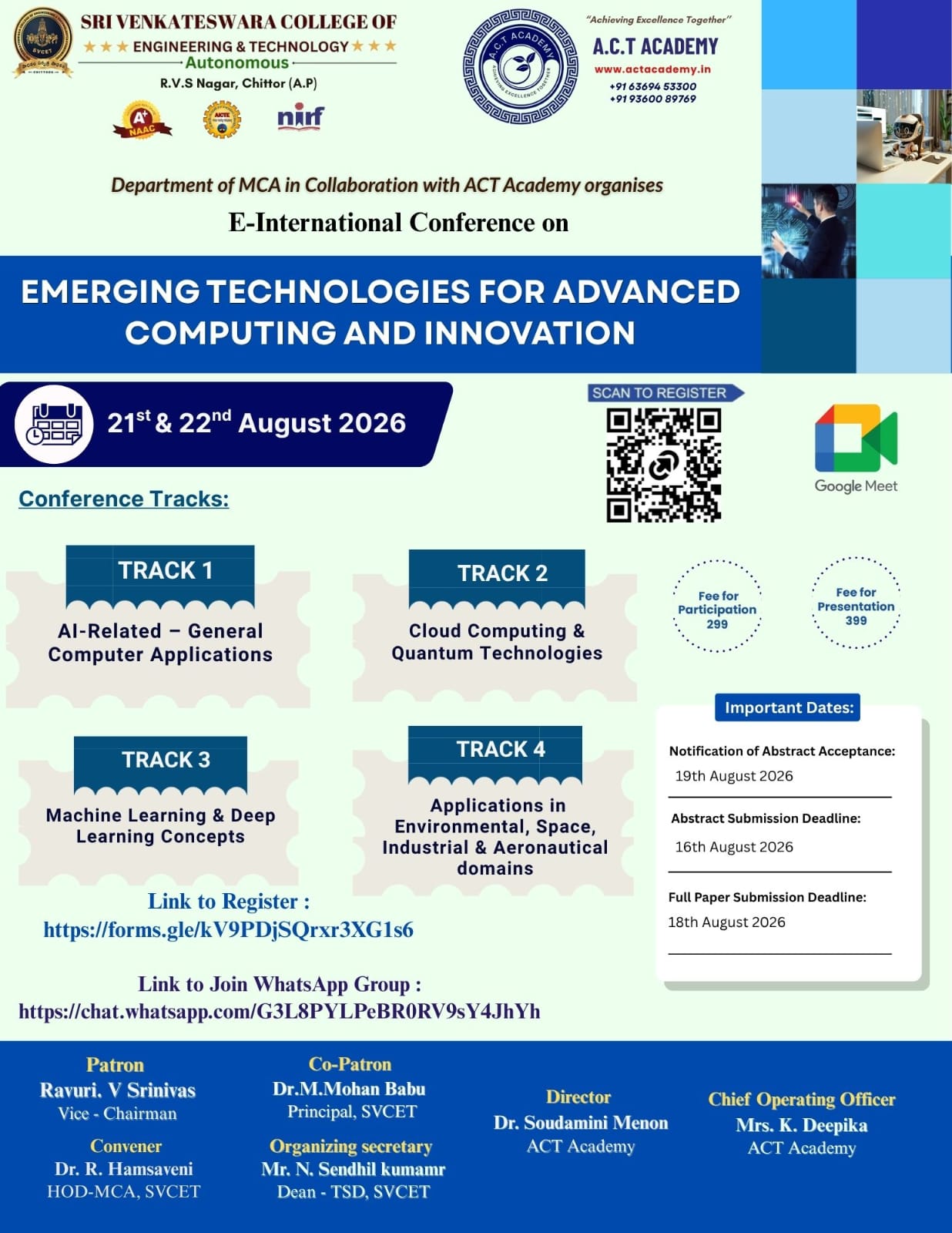
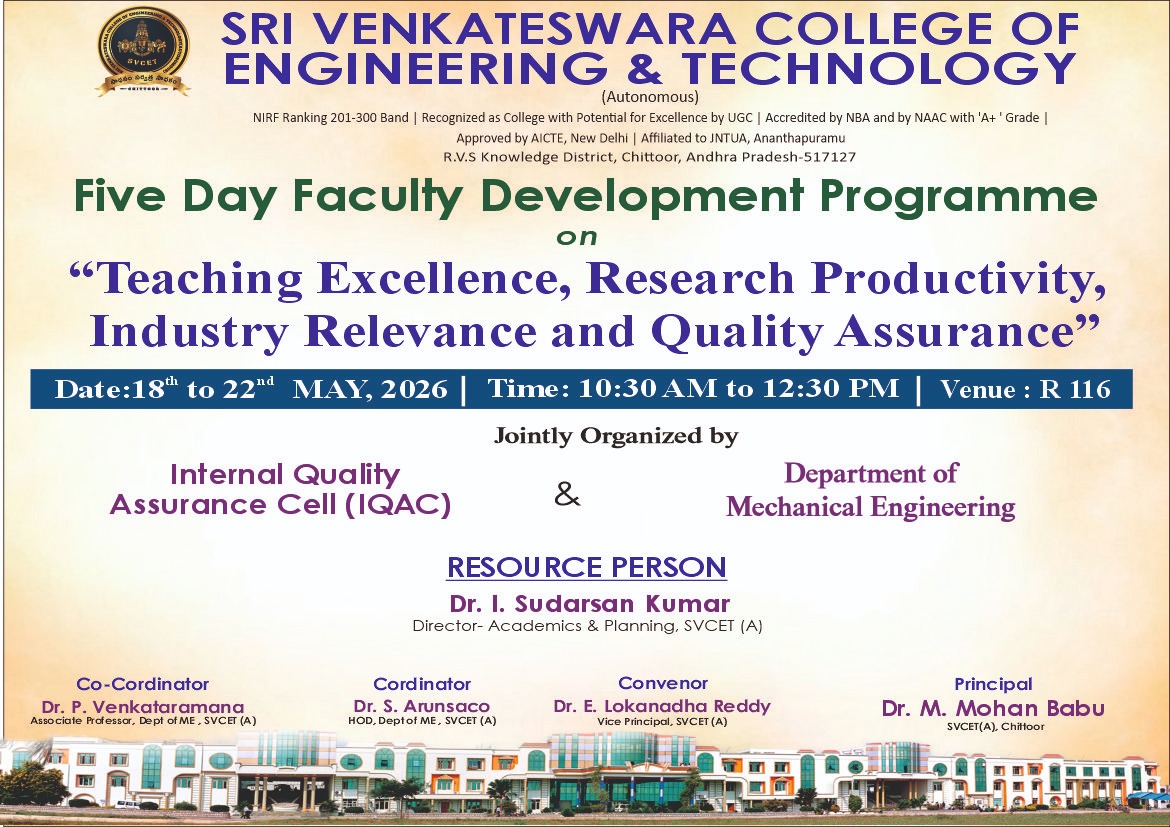
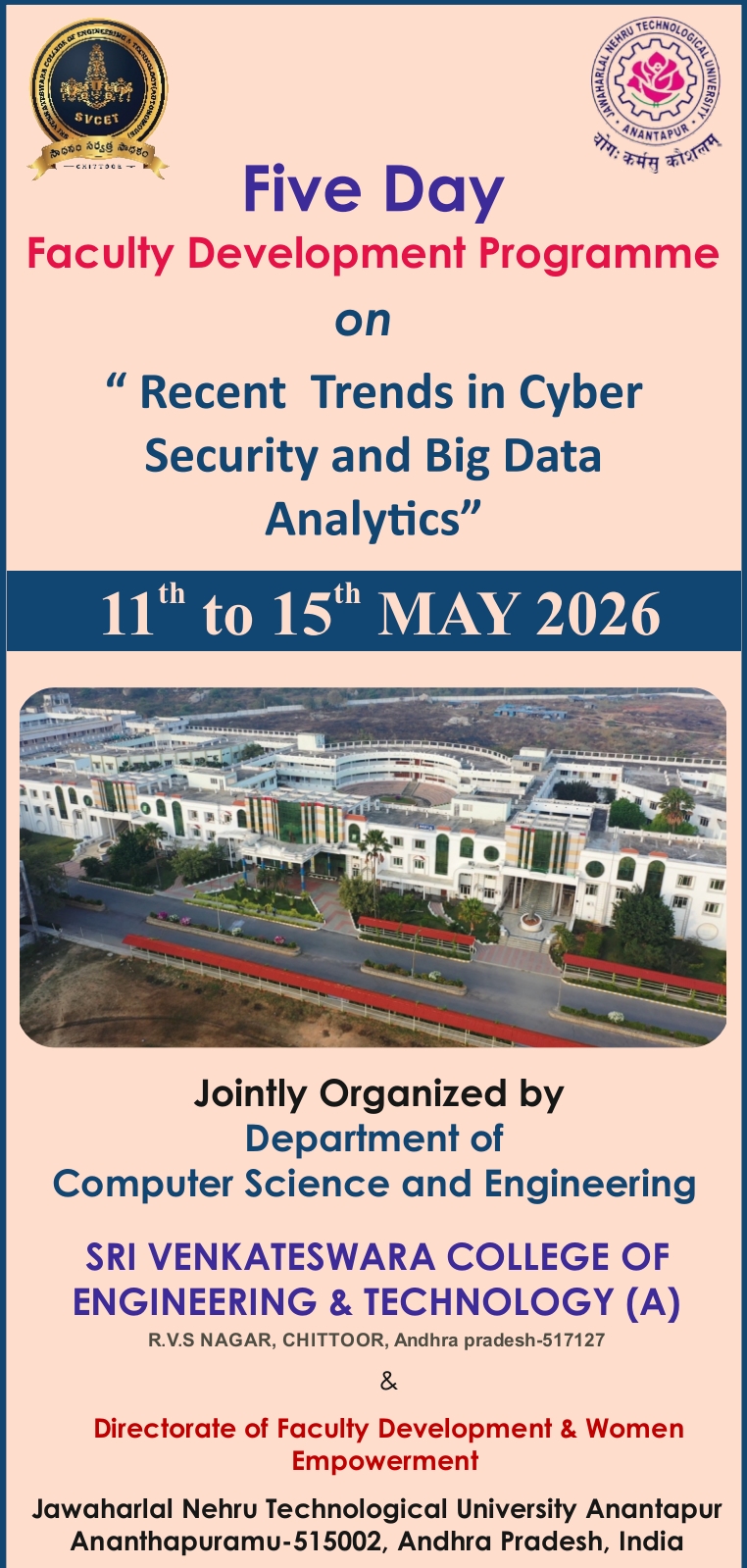
Academic year 2024-2025 : Events Organized:
|
S.No |
Title |
Name of the Event: Guest Lecture/Workshop/Training Programme |
Resource Person |
Period and Duration |
|
1 |
One Week Workshop on “Advanced Deep Learning Techniques with Real Time Applications |
Workshop |
Mr. Jai Ganesh Suresh. Senior AI Architect Lead, Valeo India Pvt. Ltd, Mr. U. Ravindran, Dr. K. Nandha Kumar, Dr. R. Mohan Raj, and Dr. G. Kavitha from CSE allied branches |
23-04-2025 to 28-04-2025 |
|
2 |
Deep Learning Techniques for Image Processing -real Time Application |
Expert Lecture |
Dr. G. N Vivekananda, Professor, VIT University |
9/25/2024 |
|
3 |
Advanced data Structures for Real Time Applications |
Skill oriented Program |
Mr. A. Rangaraj, Associate Professor, Dept. of MCA |
02-09-2024 |
|
4 |
Institutional Benchmarking and quality Improvement |
Guest Lecture |
Dr. Dharmendra Singh Rajput, professor, VIT University, Vellore |
25-01-2025 |
|
5 |
Embedded System using MATLAB |
Workshop |
Dr. J. Satheesh Kumar, Associate Professor, Dept. of ECE, SVCET |
27-2-2025 to 28-2-2025 |
|
6 |
IPR for Engineers and Technologists: Safeguarding Innovative Creations |
Expert Lecture |
Dr. Ramalingam, Assistant Professor, VIT University, Vellore |
5-03-2025 |
Academic year 2024-2025 : Workshop/Training Programme/FDP/ Attended:
|
S.No |
Name of the Faculty |
Name of the Event: Lecture/Workshop/Training Programme/FDP/Conferences |
Oranganized by |
Period (From date-To Date Duration) |
Duration |
|
1 |
Dr. M. Lavanya |
Modern Cyber Security with AI&ML |
Sri Venkateswara College of Engineering and Technology |
27/03/2025 |
31/03/2025 |
|
2 |
Dr. G. Kavitha |
Modern Cyber Security with AI&ML |
Sri Venkateswara College of Engineering and Technology |
27/03/2025 |
31/03/2025 |
|
3 |
Mr K Anjaneyulu |
Instructional Design and Delivery Systems |
Sri Venkateswara College of Engineering and Technology |
12/08/2024 |
17/08/2024 |
|
4 |
Dr. M. Lavanya |
Effective Analysis of Mental Health Using AI and Machine Learning in Social Media Analytics |
Sri Venkateswara College of Engineering and Technology |
28/03/2025 |
29/03/2025.
|
|
5 |
Dr. G. Kavitha |
Food Calaory Estimation and BMI Prediction Using ML |
Sri Venkateswara College of Engineering and Technology |
28/03/2025 |
29/03/2025 |
|
6 |
Dr. M. Lavanya |
Advanced Applications of AI in Research & Innovations |
Sri Venkateswara College of Engineering and Technology |
24/03/2025 |
28/03/2025 |
|
7 |
Dr. K. Nandha Kumar |
Advanced Applications of AI in Research & Innovations |
Sri Venkateswara College of Engineering and Technology |
24/03/2025 |
28/03/2025 |
|
8 |
Dr. R. Mohanraj |
Advanced Applications of AI in Research & Innovations |
Sri Venkateswara College of Engineering and Technology |
24/03/2025 |
28/03/2025 |
|
9 |
Dr. G. Kavitha |
Advanced Applications of AI in Research & Innovations |
Sri Venkateswara College of Engineering and Technology |
24/03/2025 |
28/03/2025 |
|
10 |
Ms. D. Gayathri |
Advanced Applications of AI in Research & Innovations |
Sri Venkateswara College of Engineering and Technology |
24/03/2025 |
28/03/2025 |
|
11 |
Ms. D. Shruthi |
Advanced Applications of AI in Research & Innovations |
Sri Venkateswara College of Engineering and Technology |
24/03/2025 |
28/03/2025 |
|
12 |
Ms. T. Princess Raichel |
Advanced Applications of AI in Research & Innovations |
Sri Venkateswara College of Engineering and Technology |
24/03/2025 |
28/03/2025 |
|
13 |
Mr. U. Ravindran |
Advanced Applications of AI in Research & Innovations |
Sri Venkateswara College of Engineering and Technology |
24/03/2025 |
28/03/2025 |
|
14 |
Dr. M. Lavanya |
GEN AI Tools and Techniques |
Sri Venkateswara College of Engineering and Technology |
11/11/2024 |
16/11/2024 |
|
15 |
Ms. D. Gayathri |
Artificial Intelligence-Soft Computing |
Sri Venkateswara College of Engineering and Technology |
9/12/2024 |
14/12/2024 |
|
16 |
Ms. D. Gayathri |
GEN AI Tools and Techniques |
Sri Venkateswara College of Engineering and Technology |
11/11/2024 |
16/11/2024.
|
|
17 |
Ms. D. Gayathri |
FDP on Cloud Architect |
Sri Venkateswara College of Engineering and Technology |
18/11/2024 |
22/11/2024 |
|
18 |
Mr. U. Ravindran |
OpenCV for Image and Video Processing Applications |
Sri Venkateswara College of Engineering and Technology |
22/07/2024 |
26/07/2024 |
|
19 |
Dr. R. Mohanraj |
OpenCV for Image and Video Processing Applications |
Sri Venkateswara College of Engineering and Technology |
22/07/2024 |
26/07/2024 |
|
20 |
Dr. K. Nandha Kumar |
The power of Trio: Communication soft skills and 21st century competencies |
Sri Venkateswara College of Engineering and Technology |
13/09/2024 |
|
|
21 |
Dr. K. Nandha Kumar |
Gen-AI and Prompt Engineering Using Microsoft Co-Pilot |
Sri Venkateswara College of Engineering and Technology |
16/09/2024 |
20/09/2024 |
|
22 |
Dr. K. NandhaKumar |
International Faculty Development Program on Project Excellence Guide: Digital Marketing |
Sri Venkateswara College of Engineering and Technology |
21/10/2024 |
25/10/2024 |
|
23 |
Dr. K. NandhaKumar |
AI TOOLS |
Sri Venkateswara College of Engineering and Technology |
17/02/2025 |
21/02/2025 |
|
24 |
Dr. G. Kavitha |
Instructional Design and Delivery Systems |
Sri Venkateswara College of Engineering and Technology |
12/08/2024 |
17/08/2024 |
|
25 |
Dr. R. Mohanraj |
Instructional Design and Delivery Systems |
Sri Venkateswara College of Engineering and Technology |
12.08.2024 |
17.08.2024 |
Data will be updated soon!
Contact Details
/Lavanya.jpg)