
Computer Science and Engineering Department
Department of Computer Science Engineering
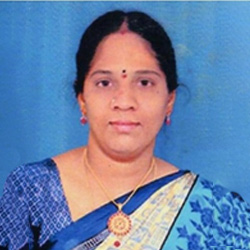
Dr. P. Jyotheeswari
HOD & ASSOCIATE PROFESSOR
Ph.D
Department Profile
The Department of Computer Science and Engineering (CSE) at Sri Venkateswara College of Engineering and Technology (SVCET) was established in 1998 and has grown significantly to meet the increasing demand for skilled computer science professionals. Accredited by the National Board of Accreditation (NBA) multiple times, the department offers B.Tech. and M.Tech. programs with a curriculum designed to blend theoretical knowledge with practical engineering fundamentals. The department features state-of-the-art laboratory facilities, Wi-Fi-enabled classrooms, and active student chapters of professional societies like ACM, CSI, IEEE, and CodeChef to foster hands-on learning and technical excellence. Students are trained in areas such as artificial intelligence, machine learning, cloud computing, and Internet of Things, with a focus on critical thinking, communication, and problem-solving skills, preparing them for diverse careers or further studies.
The department actively collaborates with industry leaders, having signed MoUs with organizations like Infosys, IBM, Oracle Academy, and SAP India Pvt. Ltd., offering students opportunities for internships, onsite training, and collaborative research projects. With regular workshops, industrial visits, and technical lectures by industry experts, the department ensures students stay up-to-date with the latest industry trends. Graduates of the program are well-prepared for careers in academia, research, industry, and entrepreneurship, equipped to tackle innovation and problem-solving using computational techniques and technologies.
Our Objectives
- To provide a strong foundation in computer science fundamentals and advanced topics like artificial intelligence, machine learning, cloud computing, and Internet of Things to prepare students for diverse career opportunities.
- To foster innovation and problem-solving skills by blending theoretical knowledge with hands-on practical learning through state-of-the-art facilities, industry collaborations, and experiential training.
- To empower students with industry-relevant skills through partnerships with leading organizations like Infosys, IBM, Oracle, and SAP India, enabling internships, onsite training, and collaborative research projects.
- To promote professional development and engagement by encouraging active participation in professional societies such as ACM, CSI, IEEE, and CodeChef, as well as organizing workshops, technical lectures, and industrial visits.
- To cultivate critical thinking, communication, and teamwork abilities that enable students to excel in multidisciplinary environments and adapt to the ever-changing IT industry landscape.
- To prepare graduates for leadership roles and advanced studies in academia, research, or entrepreneurship, ensuring they contribute effectively to technological advancements and societal needs.
Department Strength
- ✔ NBA Accreditation
- ✔ State-of-the-Art Infrastructure
- ✔ Industry Collaborations
- ✔ Diverse Learning Opportunities
- ✔ Active Student Engagement
- ✔ Comprehensive Career Preparation
- ✔ Strong Faculty Expertise
Courses Offered
| Level | Course | Intake | Convenor Quota (70%) | B Category (30%) | PIO (15%) |
|---|---|---|---|---|---|
| Under Graduate | Computer Science and Engineering (B.Tech) | 360 | 252 | 108 | 54 |
| Post Graduate | Computer Science and Engineering (M.Tech) | 9 | 6 | 3 | 1 |
| Diploma | Computer Science and Engineering (Diploma) | 60 |
Vision and Mission
🎯 Vision
To develop as a Centre of Excellence in the diverse areas of computer sciences through teaching, innovation, research and collaboration thereby addressing the challenges of emerging needs
🚀 Mission
-
Produce globally competent professionals in through delivering knowledge in emerging technologies of computer science to solve real world
-
Develop domain and research skills that enable them to undertake challenging careers and pursue Higher Education
-
Imbibe morals and values among students for developing a strong professional etiquette and with a zeal for continuous learning
-
Create an ecosystem for faculty to develop further in domain competence, research aptitude and pedagogical skills
-
Develop infrastructure and facilities for different academic and research activities
Program Educational Objectives (PEO) of Computer Science and Engineering
| PEO Code | Objective |
|---|---|
| PEO-1 | Pursuing their careers in the IT industry or progressing to higher education in Engineering or management. |
| PEO-2 | Venture into entrepreneurship with a startup or an organization |
| PEO-3 | Continue to develop their professional knowledge and skills to be agile and relevant in the industry |
Program Specific Outcomes (PSOs)
| PSOs Code | Description |
|---|---|
| PSO 1 | Analyse and develop computer programs in the areas related to algorithms, system software, multimedia, web design, big data analytics, and networking for efficient design of computer-based systems of varying complexity. |
| PSO 2 | Use theoretical and practical concepts in interdisciplinary domains to provide solution to new ideas and innovations. |
Program Outcomes (PO) of Civil Engineering
| PO Code | Description |
|---|---|
| PO 1 | Engineering knowledge: Apply the knowledge of mathematics, science, engineering fundamentals, and an engineering specialization to the solution of complex engineering problems. |
| PO 2 | Problem analysis: Identify, formulate, review research literature, and analyze complex engineering problems reaching substantiated conclusions using first principles of mathematics, natural sciences, and engineering sciences. |
| PO 3 | Design / Development of solutions: Design solutions for complex engineering problems and design system components or processes that meet the specified needs with appropriate consideration for public health and safety, and the cultural, societal, and environmental considerations. |
| PO 4 | Conduct investigations of complex problems: Use research-based knowledge and research methods including design of experiments, analysis and interpretation of data, and synthesis of the information to provide valid conclusions. |
| PO 5 | Modern tool usage: Create, select, and apply appropriate techniques, resources, and modern engineering and IT tools including prediction and modeling to complex engineering activities with an understanding of the limitations. |
| PO 6 | The engineer and society: Apply reasoning informed by the contextual knowledge to assess societal, health, safety, legal, and cultural issues and the consequent responsibilities relevant to the professional engineering practice. |
| PO 7 | Environment and sustainability: Understand the impact of the professional engineering solutions in societal and environmental contexts, and demonstrate the knowledge of, and need for sustainable development. |
| PO 8 | Ethics: Apply ethical principles and commit to professional ethics and responsibilities and norms of the engineering practice. |
| PO 9 | Individual and team work: Function effectively as an individual, and as a member or leader in diverse teams, and in multidisciplinary settings. |
| PO 10 | Communication: Communicate effectively on complex engineering activities with the engineering community and with society at large, such as, being able to comprehend and write effective reports and design documentation, make effective presentations, and give and receive clear instructions. |
| PO 11 | Project management and finance: Demonstrate knowledge and understanding of the engineering and management principles and apply these to one’s own work, as a member and leader in a team, to manage projects and in multidisciplinary environments. |
| PO 12 | Life-long learning: Recognize the need for, and have the preparation and ability to engage in independent and life-long learning in the broadest context of technological change. |
UG Faculty
|
S.No |
Name of the Faculty |
Designation |
Qualification |
Experience (in Years) |
|
1 |
DR JYOTHEESWARI PURUSHOTHAM |
ASSOCIATE PROFESSOR & HOD |
Ph.D |
20 |
|
2 |
Dr. SHAILESH KUMAR |
PROFESSOR |
Ph.D |
14 |
|
3 |
Dr NARMADHA |
PROFESSOR |
Ph.D |
14 |
|
4 |
Dr A M SENTHIL KUMAR |
PROFESSOR |
Ph.D |
18 |
|
5 |
Dr K.GOPU |
PROFESSOR |
Ph.D |
12 |
|
6 |
Dr S BALAJI |
ASSOCIATE PROFESSOR |
Ph.D |
17 |
|
7 |
Dr A VINODH |
ASSOCIATE PROFESSOR |
Ph.D |
14 |
|
8 |
Dr D DHAYALAN |
ASSOCIATE PROFESSOR |
PH.D |
18 |
|
9 |
ASSOCIATE PROFESSOR |
Ph.D |
12 |
|
|
10 |
Dr SUBRATA CHOWDHURY |
ASSOCIATE PROFESSOR |
Ph.D |
6 |
|
11 |
Dr MATHAN NAGAN |
ASSOCIATE PROFESSOR |
Ph.D |
15 |
|
12 |
Dr A BHANU PRAKASH |
ASSOCIATE PROFESSOR |
Ph.D |
8 |
|
13 |
Dr MUSADIK S |
ASSOCIATE PROFESSOR |
Ph.D |
8 |
|
14 |
Dr B PALANICHELVAN |
ASSOCIATE PROFESSOR |
PH.D |
16 |
|
15 |
Mr M V VIJAYA BHASKAR |
ASSOCIATE PROFESSOR |
PH.D |
20 |
|
16 |
Ms N R SANDHYA |
ASSISTANT PROFESSOR |
PH.D |
7 |
|
17 |
Mr M BALASUBRAMANIAMN |
ASSISTANT PROFESSOR |
M.Tech |
14 |
|
18 |
Mr K SIVA KRISHNA RAO |
ASSISTANT PROFESSOR |
M.Tech |
20 |
|
19 |
Mr M TEJA KUMAR |
ASSISTANT PROFESSOR |
M.Tech |
9 |
|
20 |
Ms SHAIK FARHANA |
ASST PROFESSOR |
M.Tech |
5 |
|
21 |
Mr G S GUNANDIDHI |
ASST PROFESSOR |
M.Tech |
12 |
|
22 |
Mr SAINISCHAL REDDY |
ASST PROFESSOR |
M.Tech |
8 |
|
23 |
Mr M PAWAN KUMAR |
ASST PROFESSOR |
M.Tech |
7 |
|
24 |
Mr PUTHALAPATTU CHANAKYA |
ASST PROFESSOR |
M.Tech |
7 |
|
25 |
Ms DEEPA G |
ASST PROFESSOR |
M.Tech |
17 |
|
26 |
Ms V SUJATHA |
ASST PROFESSOR |
M.Tech |
9 |
|
27 |
Mr P THIRUMURUGAN |
ASSISTANT PROFESSOR |
M.Tech |
15 |
|
28 |
Mrs S KOMALA |
ASSISTANT PROFESSOR |
M.Tech |
10 |
|
29 |
Ms KEERTHI JAYAKANTH |
ASSISTANT PROFESSOR |
M.Tech |
1 |
|
30 |
Mr A K PUNEETH KUMAR |
ASSISTANT PROFESSOR |
M.Tech |
13 |
|
31 |
Mr K VINODH KUMAR |
ASSISTANT PROFESSOR |
M.Tech |
5 |
|
32 |
Mr G SAI KUMAR |
ASSISTANT PROFESSOR |
M.Tech |
7 |
|
33 |
Mrs L KAVYA |
ASSISTANT PROFESSOR |
M.Tech |
1 |
|
34 |
Ms DEVIKA |
ASSISTANT PROFESSOR |
M.Tech |
6 |
|
35 |
Mr R SILAMBARASAN |
ASSISTANT PROFESSOR |
M.Tech |
7 |
|
36 |
ASSISTANT PROFESSOR |
M.Tech |
1 |
|
|
37 |
Ms UDAY PREETHA |
ASSISTANT PROFESSOR |
M.Tech |
1 |
|
38 |
Mr N PRAKASH |
ASSISTANT PROFESSOR |
M.Tech |
24 |
|
39 |
Mr K S VIJAY KUMAR |
ASSISTANT PROFESSOR |
M.Tech |
14 |
|
40 |
Mr E NANDAKUMAR |
ASSISTANT PROFESSOR |
M.Tech |
18 |
|
41 |
Ms P R VASANTHI |
ASSISTANT PROFESSOR |
M.Tech |
8 |
|
42 |
Ms MANOCHITHRA |
ASSISTANT PROFESSOR |
M.Tech |
17 |
|
43 |
Mr SONU KUMAR RAY |
ASSISTANT PROFESSOR |
M.Tech |
|
|
44 |
Ms P DIVYA |
ASSISTANT PROFESSOR |
M.Tech |
3 |
|
45 |
Mr GUGULOTHU KISHAN |
ASSISTANT PROFESSOR |
M.Tech |
18 |
M.Tech Faculty
|
S.No |
Name of the Faculty |
Designation |
Qualification |
Experience (in Years) |
| 1 | Dr V SUNITHA | PROFESSOR | Ph.D | 12 |
| 2 | Dr S M C SIREESHA | ASSOCIATE PROFESSOR | 5 | |
| 3 | Mr MUTHUKUMAR S | ASSISTANT PROFESSOR | M.Tech | 25 |
Diploma Faculty
|
S.No |
Name of the Faculty |
Designation |
Qualification |
Experience (in Years) |
|
1 |
Mr Berangi Akshay |
LECTURER |
B.TECH |
5 |
|
2 |
Mr Brahmanapalli Theja |
LECTURER |
B.TECH |
5 |
|
3 |
Mr Gillela Dayakar Pavan |
LECTURER |
B.TECH |
5 |
|
4 |
Mr Anwar Shaik Bata |
LECTURER |
B.TECH |
5 |
|
5 |
Mr Pandikunta Vital Reddy Puneeth |
LECTURER |
B.TECH |
4 |
|
6 |
Mr Mebdherkar Sathish Kumar |
LECTURER |
B.TECH |
2 |
|
7 |
Mr Shaik Saddam |
LECTURER |
B.TECH |
1 |
|
8 |
Ms Bungatavula Padmaja |
LECTURER |
B.TECH |
1 |
|
9 |
Mr Bhanu Saran Reddy |
LECTURER |
7 Months |
|
|
10 |
Mr Prakash Boyina |
LECTURER |
7 Months |
|
|
11 |
Ms P Esmitha |
LECTURER |
8 Months |
|
|
13 |
Ms E Gayathri |
LECTURER |
1 |
Faculty Publications
Dr. P. Jyotheeswari
1 Dhayalan, D., P. Jyotheeswari, and P. Nandakumar. "Load sharing using job shift by prediction mechanism on distributed computing." In AIP Conference Proceedings, vol. 3111, no. 1. AIP Publishing, 2024.
2 Goel, Manav & S, Ananda & Jyotheeswari, P & R, Sangeetha & Balakrishnan, Sarojini. (2023). Early Detection of Parkinson Disease using Voice Data. International Journal on Recent and Innovation Trends in Computing and Communication. 11. 580-585. 10.17762/ijritcc.v11i11s.8188.
3 Dr. P. Jyotheeswari , Artificial Intelligence Based Health Monitoring Wearable Device, Design Number: 393730-001, Date of Issue (18/10/2023).
4 P. Jyotheeswari and N. Jeyanthi. 2022. Secure data transmission for protecting the users' privacy in medical internet of things. Int. J. Adv. Intell. Paradigms 23, 1–2 (2022), 171–185. https://doi.org/10.1504/ijaip.2022.125240.
Mr. K. Thyagarajan
1V. Kalpana, G. Jessy Sujana, K. Thyagarajan, R.V.S. Lalitha, Vamsidhar Talasila, Makarand Mohan Jadhav, Enhancing heat transfer coefficient predictions in complex geometries through hybrid machine learning approaches, Thermal Science and Engineering Progress, Volume 55, 2024, 103017, ISSN 2451-9049, https://doi.org/10.1016/j.tsep.2024.103017.
2Aggarwal, K., Renjith, P.N., Udayakumar, P, K. Thyagarajan, et al. Retraction Note: Enhancing quality of service in wireless systems using iterative weighted least squares with fuzzy logic integration algorithm. Opt Quant Electron 56, 1723 (2024). https://doi.org/10.1007/s11082-024-07682-z
3Kishorebabu, Vasanth, Pradeep Kumar Reddy Sangala, Nagaraj Subramanyam, and Thyagarajan Kaveripakam. "Decoder based VLSI architectures for nonlinear filter in image applications." In AIP Conference Proceedings, vol. 2942, no. 1. AIP Publishing, 2024.
4Vasanth, K., Radha, S., Kondoju, S.K., Anuradha, P., Anusha, N., Thyagarajan, K. (2024). Impact on Ocean Acidification Along the Hawaii Coastline Using Learning Algorithm. In: Nayak, R., Mittal, N., Kumar, M., Polkowski, Z., Khunteta, A. (eds) Recent Advancements in Artificial Intelligence. ICRAAI 2023. Innovations in Sustainable Technologies and Computing. Springer, Singapore. https://doi.org/10.1007/978-981-97-1111-6_12
5S Nagaraj, K Thyagarajan Arduino Programming Lab Manual LAP Lambert Academic Publishing ( 2023-09-15 ), ISBN-13: 978-620-6-78041-0, 2023-09-15.
6K Thyagarajan, Iot Based Green Energy Charging Station, Design No: 421337-001 Journal No. 30/2024 Dated 26/07/2024, Date of Registration :27/06/2024.
7K Thyagarajan, Artificial Intelligence Based Health Monitoring Wearable Device, Design No.: 393730-001 , 26/08/2023, Date of Issue (18/10/2023).
8K Thyagarajan, Artificial Intelligence For Ventilator Management And Optimization In Intensive Care Units, Journal No. 26/2023, Application No.202341040672 A, 46792,629, Publication Dated 30/06/2023.
9 K. Vasanth, V. Elanangai, T.S. Arulananth, K. Thyagarajan, Machine learning based metal surface roughness estimation in infrared images, Materials Today: Proceedings, 2023, ISSN 2214-7853,https://doi.org/10.1016/j.matpr.2023.03.394.
Dr.K.Aravind
1Dr Aravind K, IoT Based Vehicle Health Measuring Monitor, Design Number 397145-001, Date of Issue (21/12/2023).
2Dr Aravind K, Smart Remote Patient Monitoring Apparatus For Doctors, Design Number: 405336-001, Date of Issue (9/4/2024).
Mr.S.Muthukumar
1 Kalpana, V., Krishna Rani, M., Muthukumar, S., Rahul, S. G., Viswanath Shenoi, V., Anantraj, I., Ignisha Rajathi, G., Hasan Hussain, S., & Mary Ani Reka, A. (2024). Fidelity-Guided Restoration: Balancing Noise Reduction and Texture Preservation for Enhanced Image Details. Communications on Applied Nonlinear Analysis, 31(6S), 401-416. https://doi.org/10.52783/cana.v31.1232
Dr. D.Dhayalan
1 Dhayalan, D., P. Jyotheeswari, and P. Nandakumar. "Load sharing using job shift by prediction mechanism on distributed computing." In AIP Conference Proceedings, vol. 3111, no. 1. AIP Publishing, 2024.
Dr. R.Sangeetha
1 Goel, Manav & S, Ananda & Jyotheeswari, P & R, Sangeetha & Balakrishnan, Sarojini. (2023). Early Detection of Parkinson Disease using Voice Data. International Journal on Recent and Innovation Trends in Computing and Communication. 11. 580-585. 10.17762/ijritcc.v11i11s.8188.
Dr. P. Shanmuga Sundari
1 Saco, Arun, P. Shanmuga Sundari, Karthikeyan J, and Anand Paul. 2022. "An Optimized Data Analysis on a Real-Time Application of PEM Fuel Cell Design by Using Machine Learning Algorithms" Algorithms 15, no. 10: 346. https://doi.org/10.3390/a15100346.
Dr. J. Armstrong Joseph
1 Rao, G. Sanjiv, J. Armstrong Joseph, Gaurav Dhiman, Hussien Sobahi Mohammed, S. Degadwala and R. Bhavani. “Novel Big Data Networking Framework Using Multihoming Optimization for Distributed Stream Computing.” Wireless Communications and Mobile Computing (2022): n. pag.
2 Joseph J., A., Adilakshmi, G., Robin, C.R.R. et al. Simulation Based Investigation of Triple Heterojunction TFET (THJ-TFET) for Low Power Applications. Silicon 15, 127–131 (2023). https://doi.org/10.1007/s12633-022-01992-1
Dr R Madona Arieth
1 Anuradha, K. & Harika, B. & Ali, D.Nowshad & Chowdhury, Subrata. (2022). Congestion Management of GSTEB Routing Protocol Using K-Means Algorithm in Wireless Sensor Network. ECS Transactions. 107. 13147-13154. 10.1149/10701.13147ecst.
Data will be updated soon!
Data will be updated soon!
Syllabus Downloads
Choose your regulation to access the syllabus:
B.Tech R23 CSE Detailed Syllabus
Click below to download the syllabus for B.Tech R23 CSE Detailed
Download SyllabusB.Tech R20 CSE Detailed Syllabus
Click below to download the syllabus for B.Tech R20 CSE Detailed
Download SyllabusB.Tech R17 CSE Detailed Syllabus
Click below to download the syllabus for B.Tech R17 CSE Detailed
Download SyllabusB.Tech R14 CSE Detailed Syllabus
Click below to download the syllabus for B.Tech R14 CSE Detailed
Download SyllabusB.Tech R12 CSE Detailed Syllabus
Click below to download the syllabus for B.Tech R12 CSE Detailed
Download SyllabusM.Tech R25 CSE Detailed Syllabus
Click below to download the syllabus for M.Tech R25 CSE Detailed
Download SyllabusM.Tech R20 CSE Syllabus
Click below to download the syllabus for M.Tech R20 CSE Detailed
Download SyllabusM.Tech R15 CSE & CS Syllabus
Click below to download the syllabus for M.Tech R15 CSE & CS Detailed
Download SyllabusM.Tech R12 CSE & CS Syllabus
Click below to download the syllabus for M.Tech R12 CSE & CS Detailed
Download SyllabusData will be updated soon!
Data will be updated soon!
Data will be updated soon!
Data will be updated soon!
Data will be updated soon!
Contact Details